optimization practices

Sketchnote: Five-Step Overview of Conversion Optimization

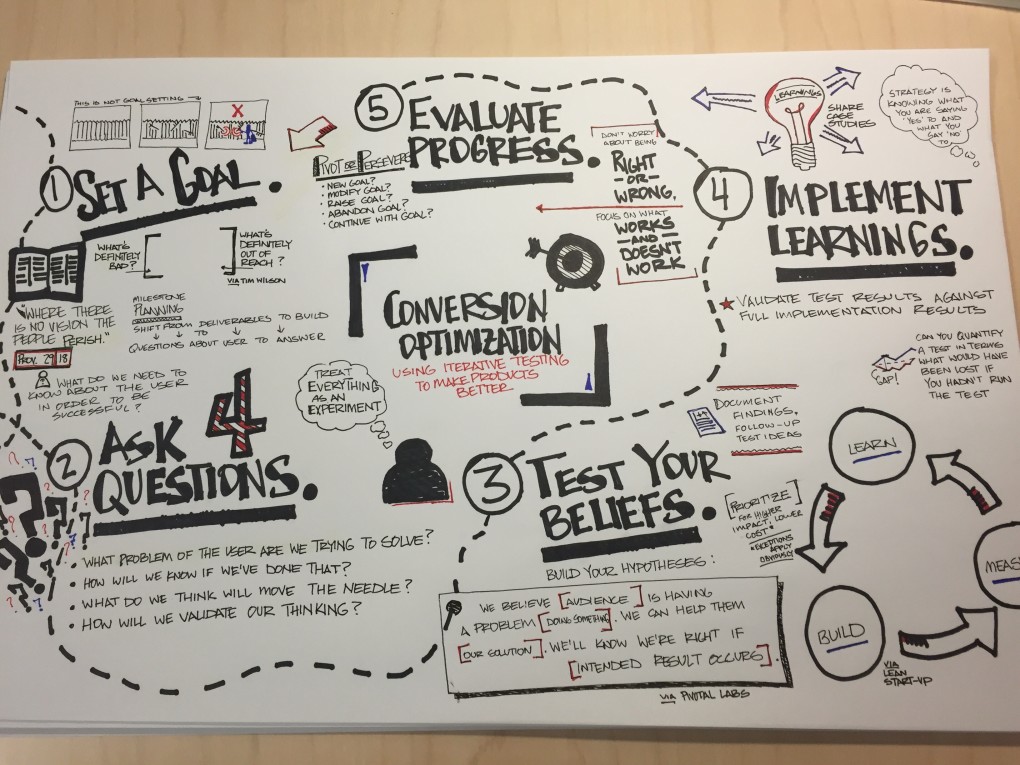
I have been working on overhauling some documentation for the services I offer clients at work around A/B testing and the discipline of conversion optimization. While working on how to frame and position my presentation, I remembered a tweet I saw from Marc Bourguignon on replacing powerpoints with sketchnotes. I considered myself challenged:

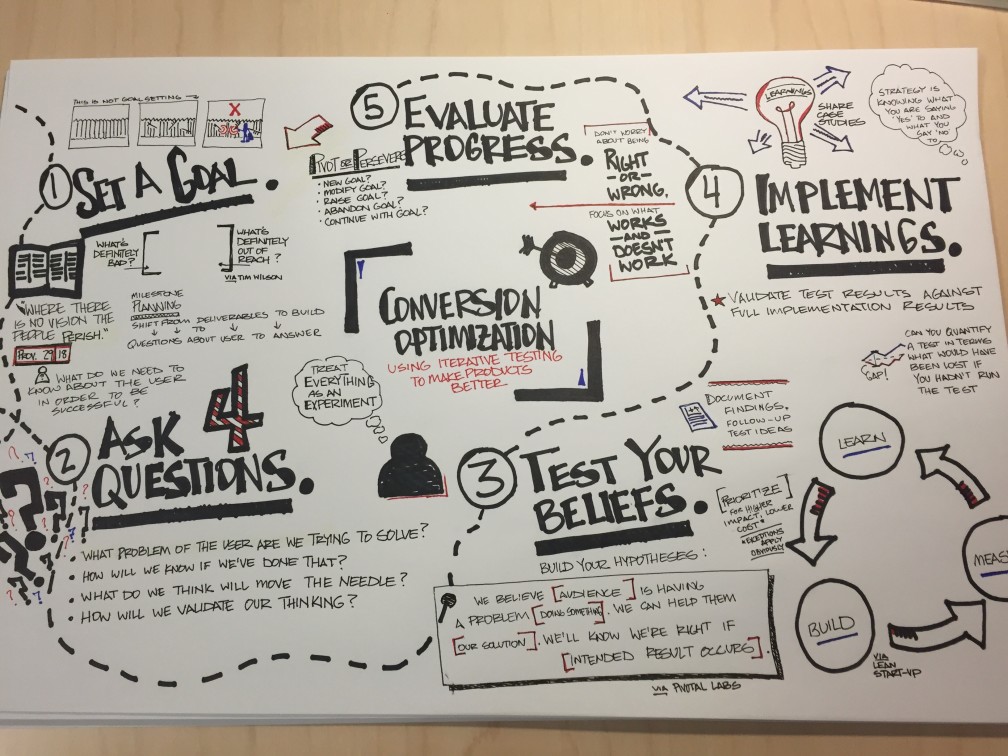
So I sat down at lunch and started to doodle. I focused on organizing the work into five general steps of conversion optimization:

  1. Set a goal
  2. Ask four key questions
  3. Test your beliefs
  4. Implement learnings
  5. Evaluate progress

Presenting the finished result: Conversion Optimization, Using Iterative Testing Methodology to Improve Your Product.
Conversion Rate Optimization  Sketchnote

The Risks in Following Best Practices Blindly

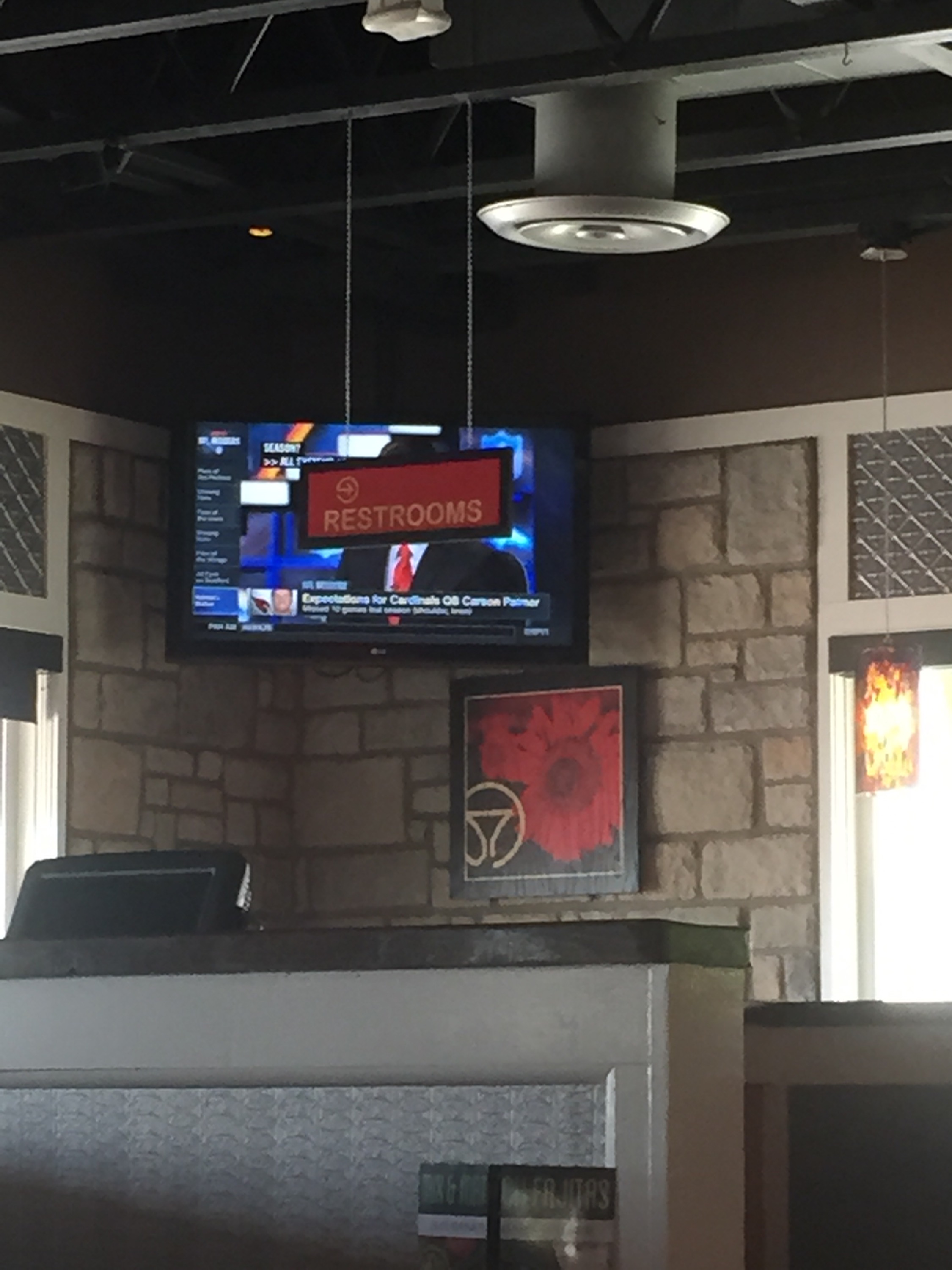
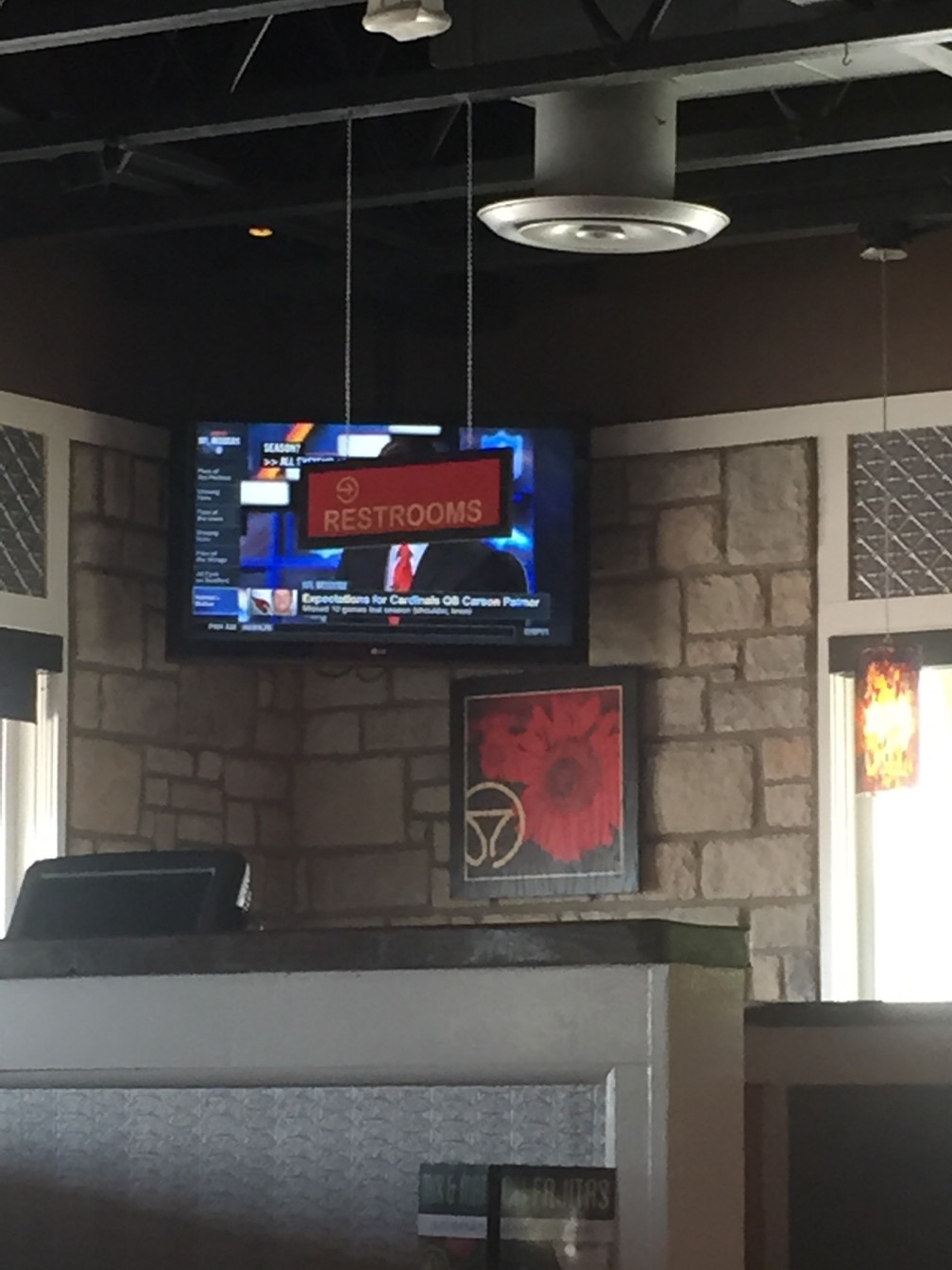
My wife and I took our kids to Chili’s the other day for lunch. We sat down and glanced up at the TV that was in my line of sight. This was my view:

The restroom sign effectively blocking the television screen for nearly everybody for whom that screen is in their direct line of sight.

I snapped a picture of it for some social media chuckles, but the more I’ve thought about it, there’s a lesson in design and product strategy. It reveals a simple truth that there really is no best practice, only better practices that should be validated against the needs of your strategy.

Context is Everything

Let’s go back to that Chili’s dining area. There are two patterns that by themselves are good ideas. Pattern #1: By putting the TV in the corner of the restaurant, the maximum viewing angle is achieved. Pattern #2: By placing  the sign at the end of the store in a visible location, such as the end of a row, users can quickly confirm they are heading the right direction towards the bathroom.

In this case only one of the patterns is severely impacted for a vast majority of the consuming audience. Only peripheral users could visually access the full television viewing experience. 

Before you adopt a best practice, make sure to validate it through user research and/or A-B testing: make sure it makes sense in your rhetorical situation. 

Moo.

Chik-Fil-A was ranked as the top fast food restaurant brand by the American Consumer Satisfaction Index (ASCI). And with campaigns like Cow Appreciation Day, it’s not too hard to see why.

ASCI specifically called out perceptions around food quality, but the food itself is hardly where that begins. Customer service satisfaction is a leading indicator of our perceptions of our meal.

Consider the following details that the average consumer won’t necessarily pick-up on but lead to a strong, consistently positive brand experience:

  • Employees always say “My Pleasure” instead of “your welcome.”
  • Very minimalist approach to menu design on a bright white backdrop
  • Guest orders are called out by name instead of a number
  • No extra costs for sauces
Image

Customer Journey Mapping Workshop

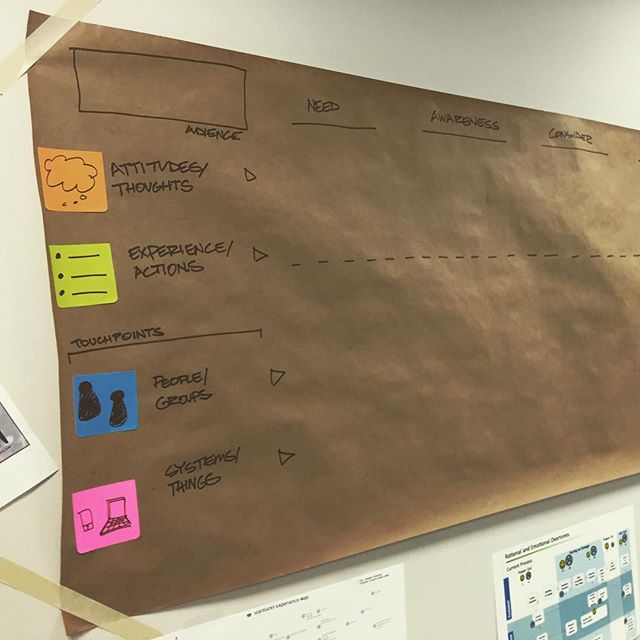
Journey Mapping is a powerful customer experience collaboration tool. Done well, it’s a tool you can use across your organization to describe the tasks, attitudes, and touchpoints that make up a customer’s interaction with your product/service. Combined with metrics and research, it can be used to prioritize pain points and otherwise identify opportunities to improve customer satisfaction.

Each journey map is going to be a little different. The skeleton of a map pictured above was used for an initial brainstorming workshop with a client to help them kickoff an in-depth strategic road-mapping exercise that will produce detailed journey maps.