Ceteris Parabis: “The Latin Principle”

When life turns a shade of gray and decisions get complicated, focusing on the most important principles can see us through.

Lately in General Conference, among many other themes and important messages, I’ve seen two ideas that provide an interesting contrast to each other:

  1. This generation has a great potential for righteousness and has been saved to be the Lord’s people in the latter days.
  2. The standards and morals of the world are quickly deteriorating and it will get even worse.

We often talk about how great this generation is, but let’s not forget why. While David A. Bednar was president of Brigham Young University, Elder Maxwell came to speak for a devotional. In their conversations that day, Elder Maxwell made a statement that impressed President Bednar. He said, “The youth of this generation have a greater capacity for obedience than any previous generation,” (“Things as They Really Are,” David A. Bednar, Ensign, June 2010)

And yet, “now we live in a world where people are confused. If you don’t believe it, go and watch the news,” (Children’s Songbook, no. 110). The world today offers so many shades of gray. For many, they’ve abandoned absolute concepts of right and wrong altogether. I have a younger sister about to enter high school and a brother-in-law who just finished high school. I haven’t been out of high school that long and I still marvel at some of the challenges they are facing that I didn’t even dream of having to deal with.

How is this generation to keep its moral compass strong in a world that is seemingly harder and harder to navigate successfully?

Keep this question in mind, we’ll come back to it.

Economic Functions

Businesses face complex decisions all the time. There are a lot of factors to balance before a company can determine a quantity to produce and a price to sell at. What kind of factors are we talking about? Some include:

  • Labor costs (who to hire and when they should work?)
  • Equipment costs (called capital)
  • Interest rates
  • Advertising
  • Household Income (when this changes, how does it change demand for my product?)
  • The price of related goods
  • Taxes and other regulations
Not only do I need to be aware of these factors, but as an economist, I want to figure out how much these impact my business. To do that, I use statistical regression analysis (sounds like fun right?) to get an idea of a ‘best fit’ formula that accounts for most combinations of the factors above. This formula is called an economic function. It often looks something like this:
Quantity=300,000-25P+2A+.003I-.09PR-.0002T
If all that sounds confusing, it can be. One of my professors calls it ‘soup making’. You keep experimenting with different combinations and tests until you come out with a reciepe that ‘tastes’ the best. Each variable (represented by a letter) can changes the resulting ideal quantity. Where do I begin? How in the world do I make the right decision on how much to sell and what price?
Enter Ceteris Parabis.

‘All Else Equal’

Ceteris Parabis is Latin for ‘all else equal’. When making important economic decisions, we isolate the most important factors hold everything else constant. From the long equation above, we focus on the most important relationship: price and quantity. To hold everything else constant means to assign those other factor a value and not change it. Like a science experiment, you only want to test one relationship at a time.

Let’s pretend we are able to make some estimates for A, I, PR and T above and hold them constant. We do the math and combine them into one constant figure. The long, complicated formula above becomes:

Quantity=-25P+9,000

If you remember Algebra I, you might recognize your basic line formula: y=mx+b. Now it is really easy to focus on the relationship of price (P) and quantity. I can change the value of one and judge better the outcome of the other.

Application

In the decisions of life there are many choices that must be made and a thousand factors that might influence how we make the choice. Avoid getting bogged down in the details. When it get’s complicated, practice Ceteris Parabis. What is the most important relationship or principle that is at play? The scriptures are full of examples of men and women who understood the bigger principle and were able to fulfill God’s will and secure His blessings. Unfortunately there are some, like David and Solomon, who allowed other factors get in their way and it caused their downfall. Remember Dallin H. Oaks’ question: ‘where will it lead? (see ‘MB=MC post’).

In closing, I leave you with a favorite quote from Richard G. Scott:

“As you seek spiritual knowledge, search for principles. Carefully separate them from the detail used to explain them. Principles are concentrated truth, packaged for application to a wide variety of circumstances. A true principle makes decisions clear even under the most confusing and compelling circumstances. It is worth great effort to organize the truth we gather to simple statements of principle,”( “Acquiring Spiritual Knowledge” Ensign, November 1993, 86).

Thanks for reading.
After All We Can Do [EXCERPT]

The following is an excerpt of the Gospelnomics manuscript. It follows up our discussion last time of marginal benefit and costs (Posted July 8, 2011).

[dropcap]Being able to weigh costs and make good decisions is an important part of our experience on this earth. We learn from Abraham that we will be “[proven] . . . herewith, to see if [we] will do all things whatsoever the Lord their God shall command them,” (Abraham 3:25). It’s important to note that in order for us to prove our obedience to what the Lord commands, we will be tested. We will face ambiguity and challenge in the process. It will not always be so easy to figure out where it might lead or if it will not end well. We will need help along the way. That help might come in many forms, but the ultimate source of all assistance is the grace and love of the Savior Jesus Christ.
[/dropcap]

Part of ‘[doing] all things whatsoever the Lord [our] God shall command [us]’ involves relying on the mercy and guidance of the Savior. When we cannot fully judge the costs before us, we must be ever ready to defer to his perfect judgement.

The Savior instructed the early leaders of His restored church on this principle when he said unto them, “But behold, I say unto you, that you must study it out in your mind; then you must ask me if itbe right, and if it is right I will cause that your bosom shall burn within you; therefore, you shall feel that it is right,” (D&C 9:8).

Joseph, months previous to that revelation, learned the importance of always trusting in the Lord’s guidance through a very difficult experience.

Many of you will recall that Martin Harris was the first man to serve as Joseph’s scribe in translating the golden plates. After many pages were completed, Martin asked that he be allowed to show the translated pages to his wife, that she may be persuaded and convinced as to the work they were about.

Joseph inquired of the Lord and the answer came back “no.”

Martin wouldn’t let it go, and pleaded that Joseph ask again. He did so and the answer came back again, “no.”
And still Martin pressed and Joseph yielded, asking the Lord a third time that Martin may be allowed to show the pages to his wife.

This time the Lord consented, requiring that Martin only show the pages to his wife and to guard them closely.
Martin Harris did not keep his promise to Joseph and the Lord, resulting in the loss of the 116 pages of the Book of Lehi.

Perhaps neither Joseph or Martin could forsee any harm in the request for Martin to take the pages, but the Lord did.

When the Lord finally did give Joseph the plates again, he counselled Joseph saying,
“Marvel not that I said until you: Here is wisdom, show it not unto the world—for I said, show it not unto the word, that you may be preserved.

“Behold, I do not say that you shall not show it unto the righteous;

“But as you cannot always judge the righteous, or as you cannot always tell the wicked from the righteous, therefore I say unto you, hold your peace until I shall see fit to make all things known unto the world concerning the matter,” (D&C 10:35-37).

Take a moment and consider what decisions you might want to make where the Lord might have a different answer or solution than you’d like to hear. What wisdom can we gain from Joseph’s experience?

  • It’s highly unlikely that we will not be able to weigh the hidden costs of our actions. Because the Lord has perfect foresight, we should recognize His promptings and direction as loving warnings to shield us from the adversaries intent to destroy us.
  • To ‘marvel not’ and ‘to hold our peace’ might suggest that we should avoid complaining or murmuring against the direction of the Lord because we don’t see what the Lord sees.

Nephi teaches us that we are saved by grace after all we can do. I’d like to apply that passage here too. After all we do, we need the Savior’s assistance in making good decisions. We should do what we can but realize that it is not enough. We need His grace, His wisdom and His perfection to help us make it home.

“For my thought sare not your thoughts, neither are your ways my ways, saith the Lord.

“For as the heavens are highter than the earth, so are my ways higher than your ways, and my thoughts than your thoughts,” (Isaiah 55:8-9).

Marginal Benefit and Cost

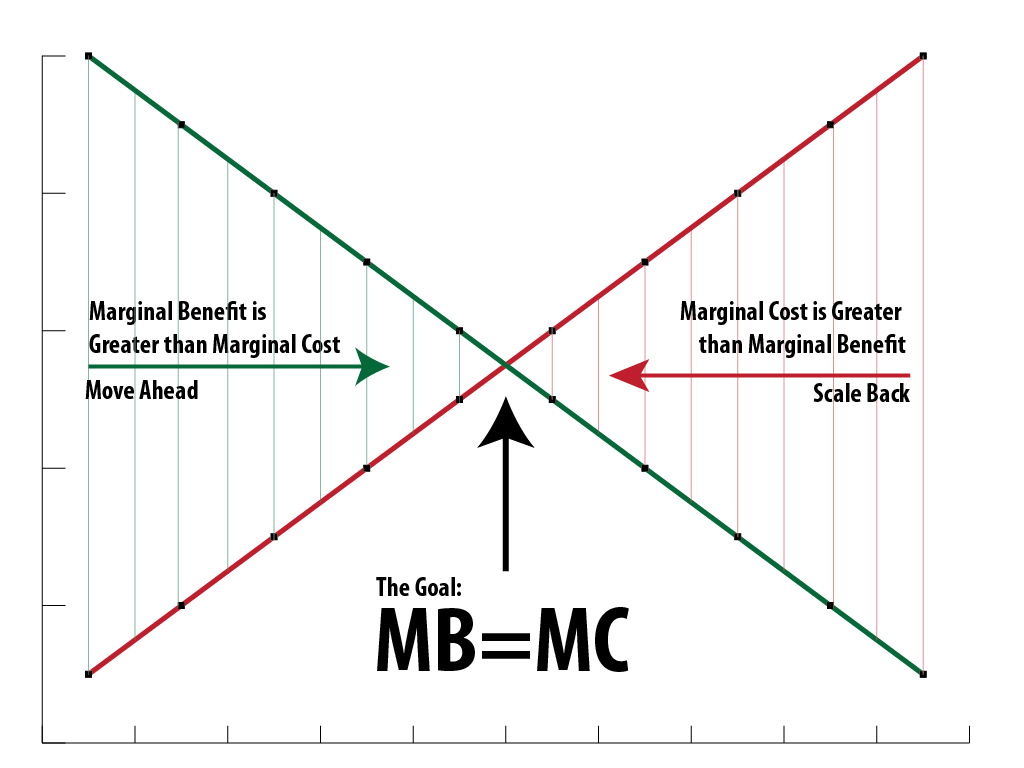
In economics, one of the primary measuring sticks for making decisions is weighing marginal benefits and marginal costs.

What do we mean by the word marginal? In simplest terms, the word marginal means ‘one more.’ For example if I consider eating one more slice of pizza, I ask myself, what is the benefit of one more slice of pizza? What is the cost of eating one more slice of pizza?

Some benefits might take the form of enjoying the flavor, satisfying hunger pains or the satisfaction that you stole the last piece from your brother.

Some of the marginal costs involved might be heartburn later in the evening, added weight, increased oil build-up on your face, or the emotional distress caused when your brother argues with you over why you always get to have the last piece.

When the cost of ‘one more’ begins to pass the benefit of ‘one more,’ it’s time to stop.

The optimization rule is simply marginal benefit=marginal cost, or

MB=MC

As long as marginal benefit exceeds marginal cost, keep consuming. But when you arrive at MB=MC, you’ve reached an optimal consumption:

This is easier when money is involved, because it’s comparing apples to apples, or dollars to dollars.  It gets harder in our daily lives when, for example, we might be trying to figure out the marginal benefit of extra hours at the office. The marginal benefit might be more money but the cost is likely time with our families and children. How do you quantify the value of that?

We have to make decisions like this every day. It’s important to realize that not all benefits and costs are readily visible. Like President Packer’s Spiritual Crocodiles, there could be physical or spiritual costs laying nearly invisible just below the surface. These, if not accounted for, can completely overwhelm us. Nor can we fully estimate the impact of a single missionary moment, where we were willing to share the gospel or follow through on a prompting to server another.

In economics we discuss the short-run and the long-run. In Gospelnomics we add a dimension: the eternal.

In a spot-on devotional address to students at BYU, Elder Oaks discoursed on the value of considering the implications (which we’ve identified here as marginal costs and benefits) of our decisions. Dallin H. Oaks taught,

Potentially destructive deviations often seem so small that some find it easy to justify “just this once.” When that temptation arises–as it will–I urge you to ask yourself, “Where will it lead? . . . I [suggest] this [is] a valuable question against which we can measure many personal and private decisions,” (BYU Devotional, “Where will it lead?” 9 November, 2004).

My sole purpose today is to recommend this talk. I’ve been personally benefited by his message and I know it to be true. I invite you to take some time this weekend to read it, watch it or listen to it. Be sure to come back afterwards and comment on what you thought.

Thanks for reading.

Dallin H. Oaks: “Where Will It Lead?”

BYU Devotional: November 9, 2004

Gospel and Economic Law

In economics there are a few ‘laws’ that govern the basic philosophies and under-girding of economics.

The Law of Demand, the Law of Supply and the Law of Diminishing Returns–to name a few. Each of these are fundamental to understanding how and why economics is a viable field of study and research. Understanding these laws helps firms and individuals maximize their potential.

Without it them it’d be very hard to put any semblance of meaning to business practice. Determining prices and forecasting sales would be akin to the proverbial shot in the dark. How many people to hire, what will happen to my sales if I raise my price, and many other important questions would be questions left unanswered.

These laws have been derived through experience and experiment. They weren’t created by man but observed. Men and women before us like, perhaps most notably inasmuch as capitalism is concerned, Adam Smith, figured out a pattern that has proved to explain this or that phenomenon in the market. Tried and true these patterns became known as laws because of their universal application to understanding the market.

Spiritual Law: Not So Different

Likewise, “there is a law, irrevocably decreed in heaven before the foundations of this world, upon which all blessings are predicated,” (D&C 130:19). There are laws out there, beyond the control of you or I that govern the universe and how it functions. How do we know this? Our Father in Heaven taught them to us so we could gain eternal life and happiness. The prophet Joseph Smith taught:

“God found himself in the midst of spirits and glory, and because he was greater, he saw proper to institute laws whereby the rest could have the privilege of advancing like himself–that they might have one glory upon another and all the knowledge, power, and glory necessary to save the world of spirits.”

It is through coming to understand those laws that men and women on this earth find meaning on this earth. Just like understanding the laws of supply and demand help firms and individuals maximize their profits, we can be profited greatly by understanding applying gospel law to our lives:

“And again, verily I say unto you, that which is governed by law is also preserved by law and perfect and sanctified by them same,” (D&C 88:34).


Chastisement: A Love Story [Graphic]

Context

[dropcap]In Elder’s Quorum we were recently discussing Elder Christofferson’s talk on Chastisement from April General Conference. In his introduction he quoted a talk given by Dallin H. Oaks in October 2000 General Conference entitled, “The Challenge to Become”. He said,[/dropcap]

“The Final Judgment is not just an evaluation of a sum total of good and evil acts—what we have done. It is an acknowledgment of the final effect of our acts and thoughts—what we have become. It is not enough for anyone just to go through the motions. The commandments, ordinances, and covenants of the gospel are not a list of deposits required to be made in some heavenly account. The gospel of Jesus Christ is a plan that shows us how to become what our Heavenly Father desires us to become.”

As I was pondering Elder Christofferson’s use of this quote by Elder Oaks in his opening statements, it occurred to me that the idea expressed by Elder Oaks is a key reason chastisement and rebuke are so good for us. It is because it is not about what we do in this life, but what we become that receiving correction is so valuable.

Personal Story
In high school and after my mission in college, I worked in fast food to pay the bills. I found that I was the recipient of two types of feedback:

  1. Constructive feedback from supervisors and managers that helped me become a better employee (and eventually a manager).
  2. Feedback that only focused on pointing out anything and everything I had done wrong.

Now in hindsight, I realize that my personal biases and preparedness to receive feedback had two general types:

  1. I was eager to learn and improve and graciously accepted the feedback as useful and instructional.
  2. I found the feedback frustrating and annoying because it felt impersonal, self-serving or just downright picky.

The Graphic

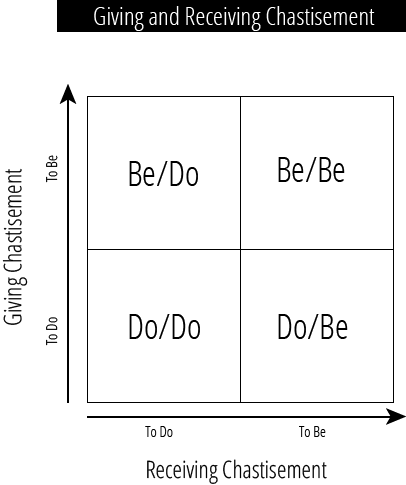
Returning to Elder Oaks, he identifies two different paradigms of judgment. There is what we have done and what we have become. Consider this in terms of chastisement. When we give feedback to others, are we focusing on their actions, what they have done, or are we trying to help them become something better? Likewise when we are the recipient of chastisement, do we take it as a personal attack (focusing on what we have done) or do we take it as something that will help us become better?

To, illustrate this idea, I present the “Do/Be Matrix: Giving and Receiving Chastisement”


Giving and Receiving Chastisement


Ask yourself, when I find myself in one of these categories, what does it look like? How do I normally behave? Considering questions like this can help us increase our awareness which provides the Spirit opportunities to teach and instruct. I’ll share below some of my thoughts:

DO/DO

Sometimes we approach feedback, we take an ‘eye for an eye’ kind of approach:

Oh like you should talk . . . last time you took all the hot water and made us five minutes late to church!

Neither side hardly gets anything out of this kind of exchange and a lot of times results in someone going too far and hurting someone’s feelings.

BE/DO

D&C 121 counsels us to follow our reproof  “afterwards [with] an increase of love toward him whom thou hast reproved, lest he esteem thee to be his enemy;

“That he may know that they faithfulness is stronger than the cords of death,” (D&C 121:43).

This is the best description that I can think of that helps us move from Be/Do to Be/Be.

DO/BE

My thoughts turned to the experiences of the many of the Nephites during the great Nephite-Lamanite wars in the Book of Alma. Alma 62, verse 41 reads:

“But behold, because of the exceedingly great length of the war between the Nephites and the Lamanites many had become hardened, because of the exceedingly great length of the war; and many were softened because of their afflictions, insomuch that they did humble themselves before God, even in the depth of humility.”

While all the Nephites had relatively the same experience (To Do), some had allowed that experience to bring them closer to God (To Be). Others became hardened, slipping into  the DO/DO category.

BE/BE

In April 2011 General Conference, Lynn G. Robbins shared the following,

“Through discipline the child learns of consequences. In such moments it is helpful to turn negatives into positives. If the child confesses to a wrong, praise the courage it took to confess. Ask the child what he or she learned from the mistake or misdeed, which gives you, and more important, the Spirit an opportunity to touch and teach the child. When we teach children doctrine by the Spirit, that doctrine has the power to change their very nature—be—over time.

“Alma discovered this same principle, that “the preaching of the word had a great tendency to lead the people to do that which was just—yea, it had had more powerful effect upon the minds of the people than the sword” (Alma 31:5; emphasis added). Why? Because the sword focused only on punishing behavior—or do—while preaching the word changed people’s very nature—who they were or could become.”


Consider for yourself what each of these zones of the Do/Be Matrix look to you. By being more aware, you will be in a position to focus more on the ‘be’ and facilitate true gospel progression.

Thanks for reading.


Display Templates

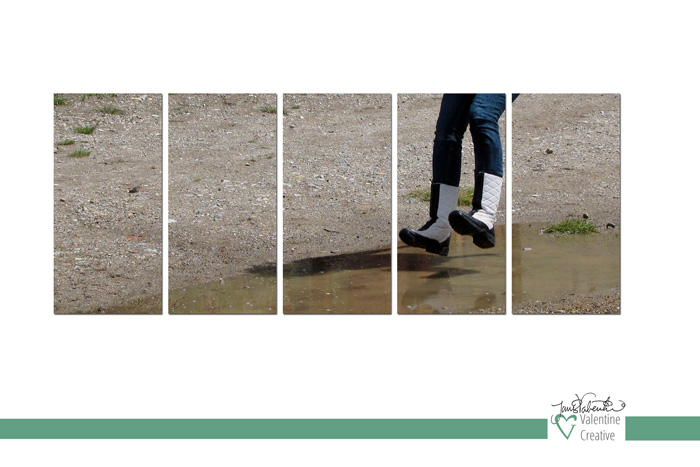
Using Photoshop clipping masks, you can create displays for your art work. The black squares are vector squares all on the same layer (if you want to display multiple images, use multiple layers). I also chose to place slight drop shadow on each of the rectangles.

Template

I placed the picture below over the top of the rectangles I created and then on the layers pallet, I chose the image layer and elected to create a clipping mask.

Jump

And the result is . . .

Final Product

Really the options are endless. You can use the same process to insert an image into text or other shapes. Below, I used the concept of a barcode to create a display template:

Barcode Template

Then I chose my image:

Light Swirls

Create the clipping mask and:

Final Product Two

Presto! Creative Display Templates.

FYI
The tracking information for the images I used in this post can be found here and here.

Night and Light

Oh the fun things you can do with light at night!

Noah's Ark

At the dollar star, I found some batter-powered glow sticks that I used to create this shot. In the absence of a tripod, I used the grill in our backyard as the designated camera holder. I used a timer as well to avoid any shaken image syndrome. In post production, I did lower the blacks a little which dropped out the silhouette of my legs in the background (For tracking information see below).

Main and Second

This picture was a lot of fun to create. I stood on the corner of Main and Second East in Rexburg. I turned up the shutter speed to four seconds, clicked shoot and started to dance.

Streaks and Stars

I used the top of my car to create the reflected streak on top of the car.

Chinese New Year

Again, I started on the corner of Second East and Main. If you look closely you can make out the Walgreen’s pharmacy logo. For this one, instead of focusing on the lights on the street level, I angled up, including more of the stoplights and signage (like McDonald’s in the far distance and the big red lights of Walgreen’s logo).

Benched

This scene and the following one were both taken in our backyard. I set the camera up to take a 15 second exposure. I had a flashlight in my hand to ‘paint’ what I wanted exposed. I simply used my hand to block direct light from catching the camera (it was easy to use content aware to take out the two instances that did happen).

Quixote's Bench

Noah’s Ark
June 11, 2011 at 10:57 p.m. Our backyard, Rexburg, Idaho
F/8.0 SHUTTER: 15 seconds ISO 200

Main and Second
June 10, 2011, 10:17 p.m. on the Southeast corner of Main Street and Second East in Rexburg, Idaho.
F/8.0 SHUTTER: 4 seconds ISO 100

Streaks and Stars
June 10, 2011, 10:01 p.m. South Second East, Rexburg, Idaho
F/8.0 SHUTTER: 2.5 seconds ISO 100

Chinese New Year
June 10, 2011, 10:18 p.m. at the South East Corner of Main Street and Second East, Rexburg, Idaho.
F/8.0 SHUTTER: 4 seconds ISO: 100

Benched
June 10, 2011, 10:50 p.m. in our backyard, Rexburg, Idaho
F/8.0 SHUTTER: 15 seconds ISO 100

Quixote’s Bench
June 10, 2011, 10:50 p.m. in our backyard, Rexburg, Idaho
F/8.0 SHUTTER: 15 seconds ISO 100

Free lunch?

[Dropcap]Chris Anderson, editor and chief of Wired Magazine and author of The Long Tail, recently published a book entitled Free: The Future of a Radical Price. In this book, Anderson explores the market’s tendency towards a free price. Everyone everywhere is offering things free.[/dropcap]

But is it really free?  Can you truly have a free price? No strings attached?

Short Answer: No. Long Answer: Yes

In physics we say for every action there is an equal and opposite reaction,

which in economics we call a cost or we say, “there is no free lunch.”

In LDS theology, we say that we don’t believe in ex nihilo creation.

Companies are finding innovative ways to offer more value and pass off the costs of production (to say, for example, advertisers or corporate sponsors), allowing companies or individuals to offer a lower or free price for their goods or services. Even Chris Anderson took part, practicing what he preached by offering for a limited time his book for free (the unabridged audio book is still available for free).

This idea lends us a couple of gospel insights:

Principle #1

When our sins our forgiven by Christ, they do not disappear. No, every sin, even in the least degree, was paid for with His precious blood. When crimson turns to wool and scarlet to snow, it is done at a great price:

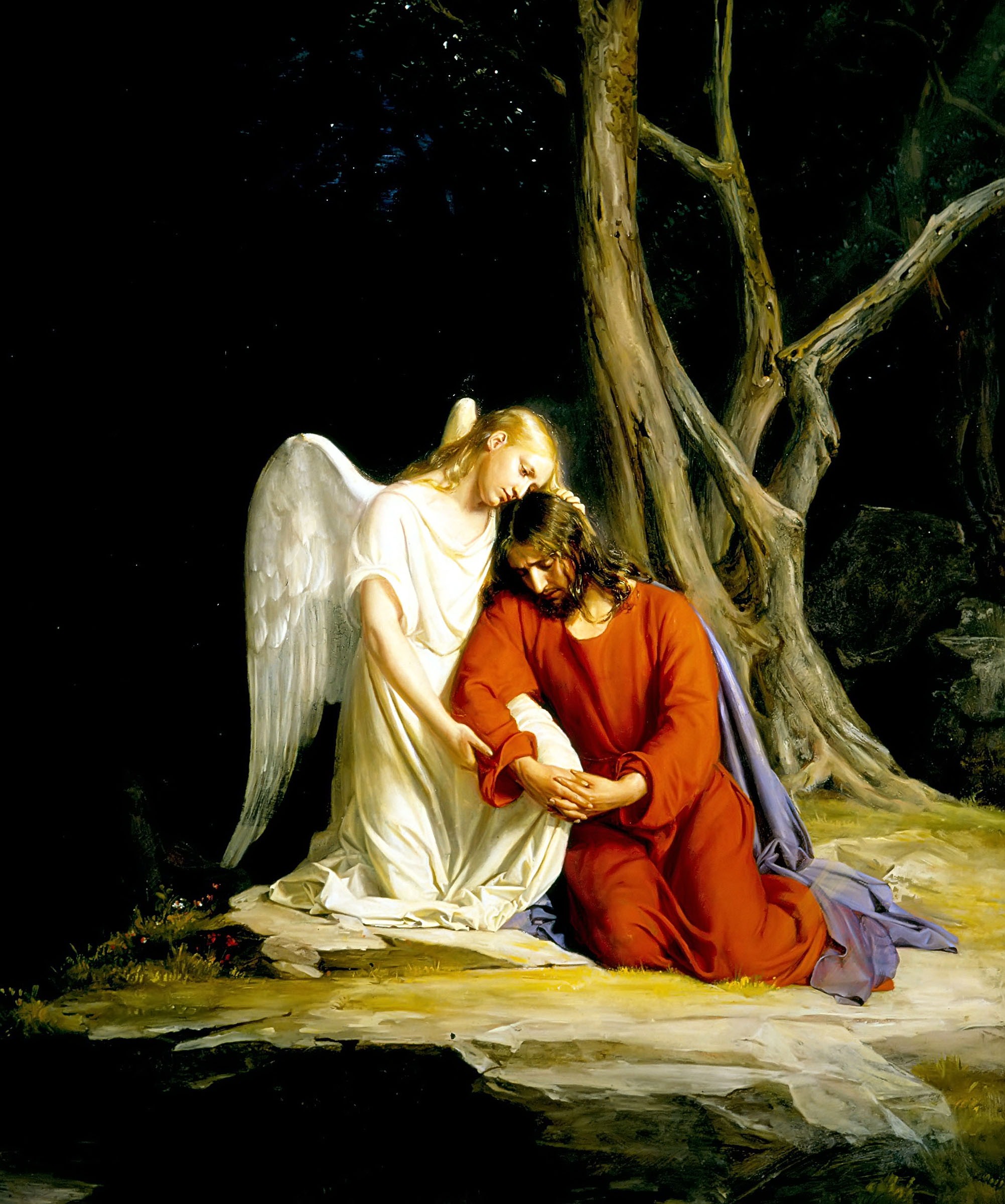
By Carl Heinrich Bloch (http://freechristimages.org) [Public domain], via Wikimedia Commons

By Carl Heinrich Bloch

” . . . how sore you know not, how exquisite you know not, yea, how hard to bear you know not. 

For behold, I, God, have suffered these things for all, that they might not suffer if they would repent;” (D&C 19:15-16).

Looking back, from time to time I have fallen into a sort of light-mindedness about the atonement. Do we sometimes forget the cost because we don’t have to pay the full weight of it? Next time you find yourself humming through the sacrament hymn, take a moment to consider what the words of that hymn are trying to teach about the great cost Christ paid for you and me.

Principle #2

Satan will do all that he can to make sin appear free: no strings attached. It is a subtle sleight of hand, shifting the up front costs of sin away, making it more readily available than ever.

What did it used to take to consume pornography? It was hard to find and expensive to come by in whatever form. Now it is virtually free to consume. You can find it in the music on the radio and the shows (and commercials) on television. Consider what it takes to find it on the internet: all it costs (up front) is a few clicks. It is cunningly convenient and so ready to access.

But there is no free lunch: not from the adversary. No pass from the costs that sin extract from us. There are terrible consequences that result from sin that none of us can ignore. It is a debt that quickly compiles interest with no escaping the collection agent. If we cannot break the cycle, we find ourselves reposes-ed with little agency and spiritually bankrupt.

Conclusion: “Long Answer: Yes.”

And yet, when we feel sin closing in around us, the Lord reaches out and says, “Come unto me all ye ends of the earth, buy milk and honey, without money and without price,” (2 Nephi 26:25).

But like Enos, we ask, “Lord, how is it done?”

“And he said unto [Enos]:  Because of thy faith in Christ, whom thou hast never before heard nor seen. And many years pass away before he shall manifest himself in the flesh; wherefore, go to, thy faith hath made thee whole,” (Enos 1:7-8).

In a world of scarcity and no free lunches, there is one way, one truth, one life that if followed, leads to a world free of sin, sorrow and suffering. What a miracle the love of God is that despite so great a cost, Christ paid it and offers us the benefits so freely. Those who argue that there are strings attached don’t realize that those are lifelines cast down from a loving Father in Heaven to lift us up to him.

I close in the words of the hymn,

I think of his hands pierced and bleeding to pay the debt!
Such mercy, such love and devotion can I forget?
No, no, I will praise and adore at the mercy-seat,
Until at the glorified throne I kneel at his feet.

How wonderful, indeed.

Thanks for reading.

Please share your thoughts below or contact me.


Photoshop Borders

First, three ordinary photos with descriptions

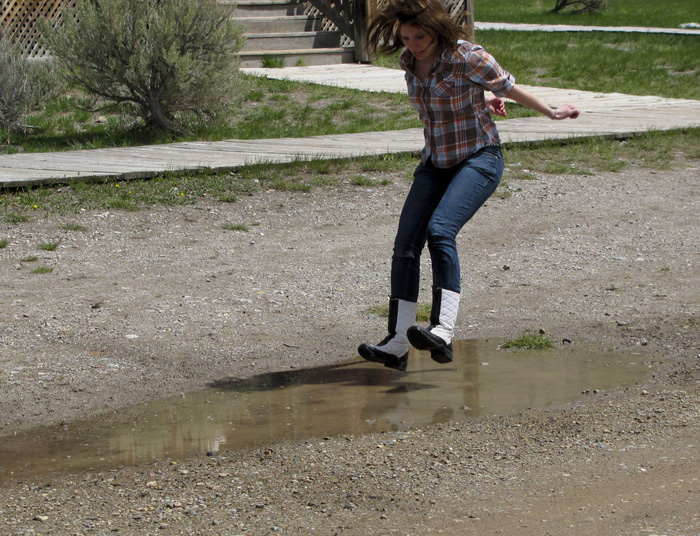
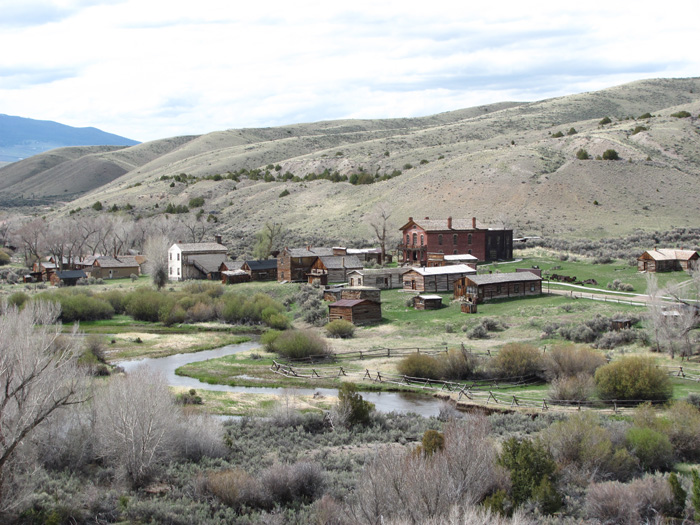
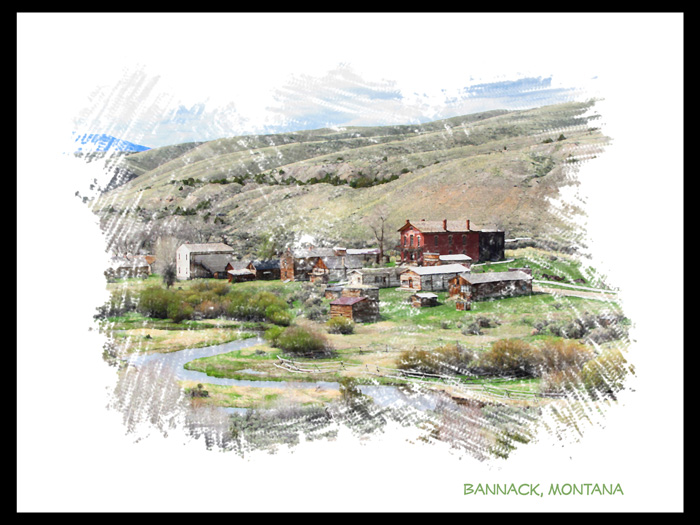
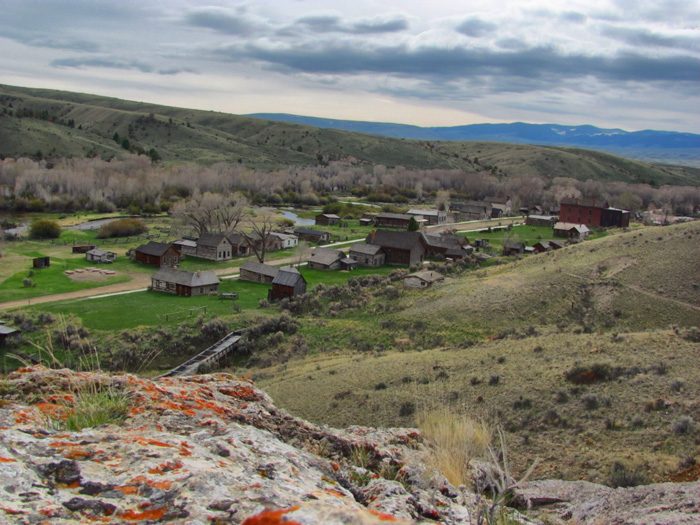
Bannack

May 25, 2011; 4:28 PM; Bannack, MT;
F/4.0 SHUTTER: 1/500 ISO: 80 Canon Powershot SX120 IS

Family Night

May 22, 2011; 7:22 PM Rexburg, Idaho
F/3.5 SHUTTER: 1/1600 ISO: 100 Canon Powershot SX120 IS

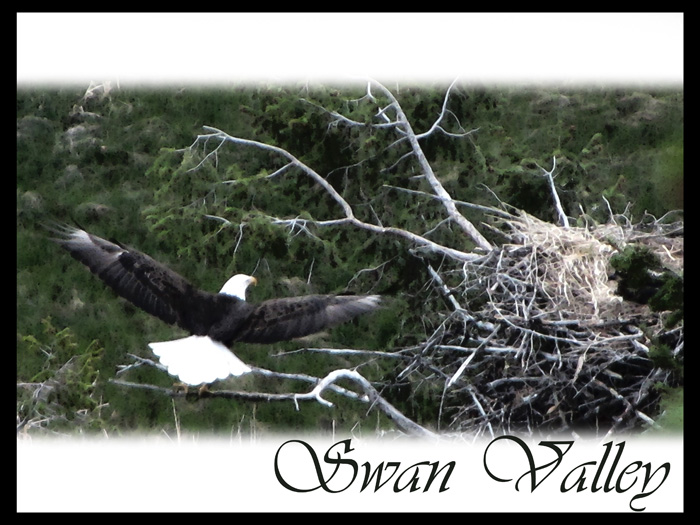
Eagle in Swan Valley

May 14, 2011; 9:16 AM, Swan Valley, Idaho
F/4.3 SHUTTER: 1/200 ISO: 200 Canon Powershot SX120 IS

Second, adding Borders

Bannack One

Process:
I added a paint daub filter to the image before clearing the image and ‘history brushing’ hte image back in. I used mainly a 90 percent opacity on a heavily speckled brush. For the final black border I increased the canvas size by 5 percent while keeping the image centered.

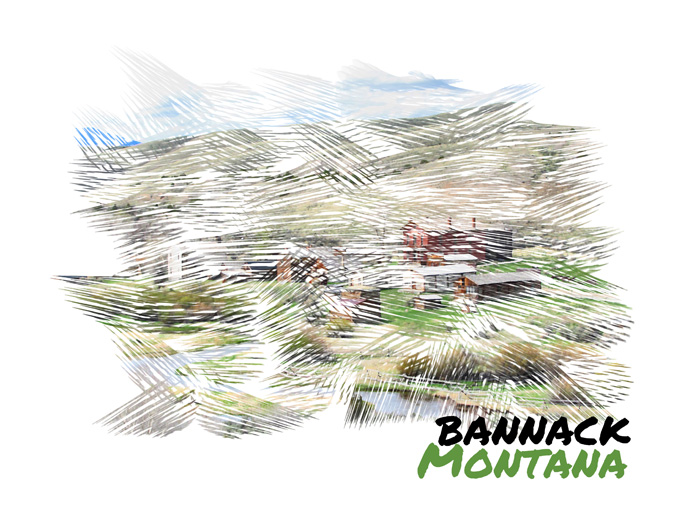
Bannack Two

Process:
I cleared the image and using the history brush I brought back what you see. I used a small brush with only three or four dots and small strokes to create the lined effect. Add a little typography (‘Permanent Marker’ from Google’s Web Font Directory) and you got a Van Gough inspired effect.

Process:
I began with duplicating the pre-edited image. I used a multiply blend on that layer, getting the darker feel. I used a mask to bring back the family. To create the border, I increased the canvas side by 5 percent twice, each time using a different color to expand the canvas, giving it a double border.

Eagle One

Side note on the image:
As I preparing my panorama post a couple weeks back, we were out past Ririe collecting some potential shots. A Bald Eagle swooped in. His nest turned out to be just below the scenic overlook (on highway 26) where we were shooting. I had to commit the unpardonable sin of digital zoom to get this picture. The eagle in this shot is probably 150 yards away.

Process:
I applied the paint daub filter again which was particularly effective in negating some of the side-effects of using digital zoom. Using the marquee tool I selected the part of the image I wanted to use and after refining the edge with a feather effect, I created a new layer and discarded the rest. I applied a black border by expanding the canvas size by 5 percent and applied some text to finish ‘er off.

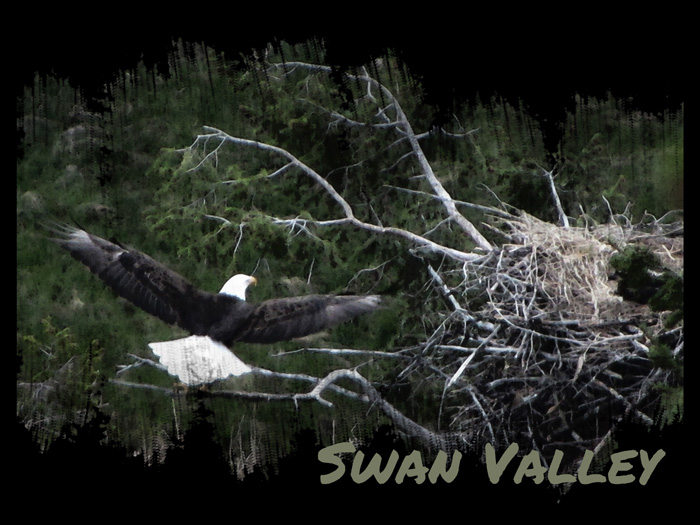
Eagle Two

Process:
Using the same paint-daub filtered image above, I cleared the image and used a history brush to bring back the image on a black backdrop.

Scanography

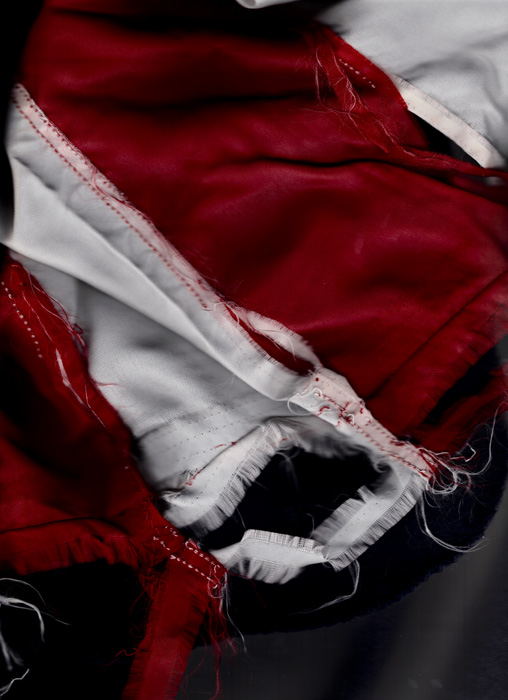
All the images in the post were made with a DELL V313w Scanner-Printer June 5, 2011 in my home.

Single Scan (Collage)


These are one scan images. The only adjustment made to any of the images was to increase the blacks slightly.

Autobiographical Scan: Mission Collage

Autobiographical Scan: The High School Years


Double Scan


I took two different scans and blended them together in Photoshop using a simple mask:

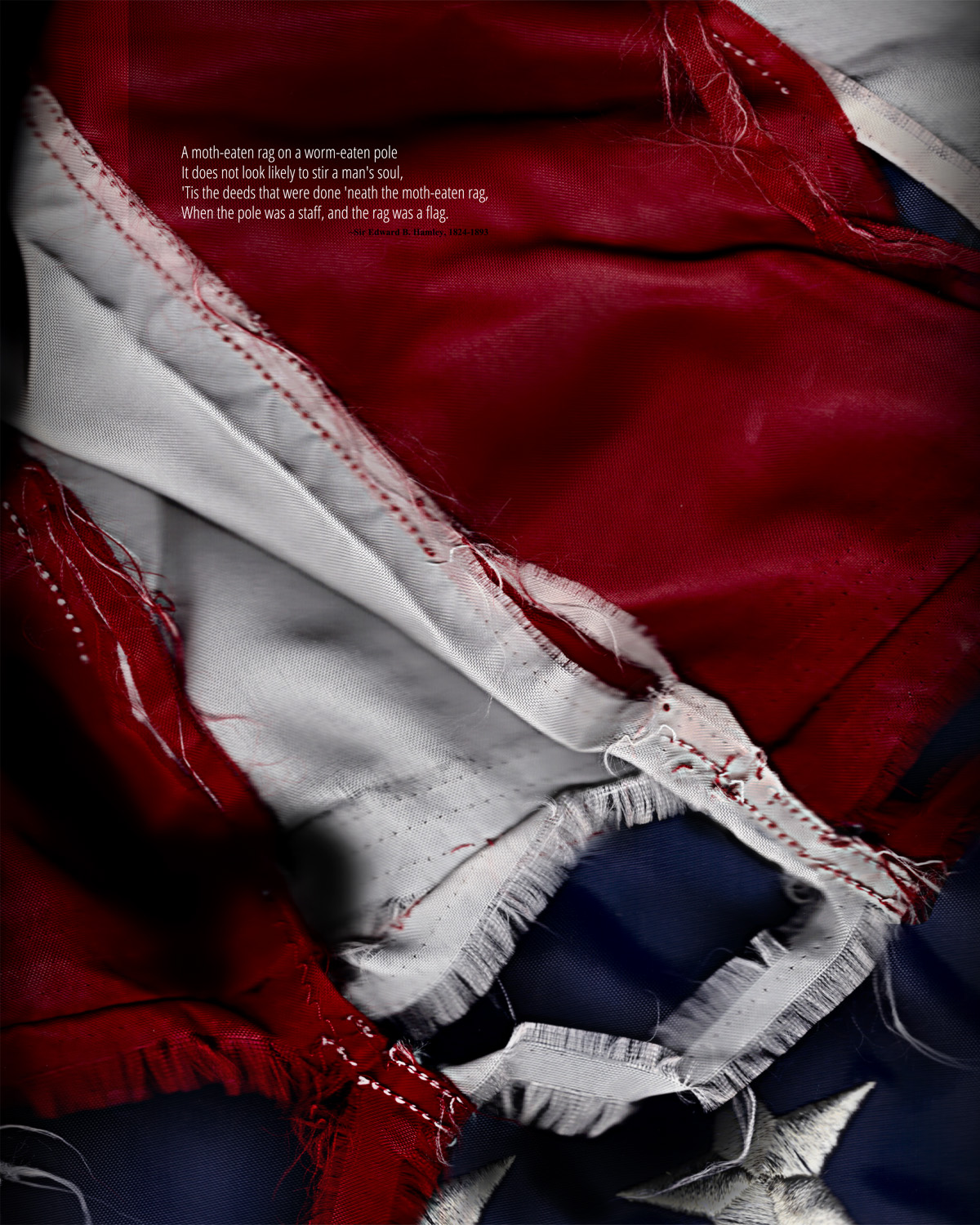
Part One: Stripes

Part Two: Stars

A variation

For this one I used a different section of the flag, which required a little more touch up (i.e. Filling in the clip-hole)

Stars and Stripes Forever

Part Two: Stars--Variation

Stars and Stripes--Two


Three Scans


You guessed it, three scans combined into one image:
I combined two images with a simple mask and then the third I applied with a soft light blending mode in Photoshop. To add a little depth, I added a hard light drop shadow to the pennies.

Part One: Stripes

Part Two: Stars--Variation

Part Three: Pennies

Final Product: "National Debt"

Get Rich Quick Schemes

[dropcap]In preparation for this post, I did a little experiment. If you type, ‘get rich quick’ into Google, you will get 39 million results in a tenth of a second. “Make Money Fast” returns 250 million results in .16 of a second. “Work from Home” returns 849 million results. “Fast money” returns 923 million hits in .14 seconds.[/dropcap]

What is it about us humans that loves the idea of being able to get a whole lot of something for nothing?

We had someone in our family who was always sharing with us the next ‘big thing;’ The grass was always greener on the other side as she touted this or that scheme. None of the schemes ever really panned out but I observed that it produced a lot of instability in her life.

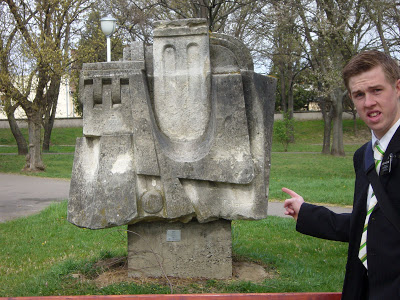
Mission Pic: Random Communist-Era art in Romania: reminiscent of the Great and Spacious Building, no?

The other day, as I was reading in the Book of Mormon, I came across a phrase I never had noticed before. In Nephi’s detailing of the Tree of Life Vision,  he states that the large and spacious building represents, in part, the vain imaginations of the world (See 1 Nephi 12:18).

I suspect that vain imaginations could apply to many things, but I think it certainly applies here. The idea we can get something for free is a rather vain imagination in my book.

Consider this quote from Elder Holland, then President Holland of BYU. He shared this newspaper clipping in a devotional address in 1982:

Utah’s large Mormon population has become a prime target for con artists and swindlers who annually gyp the state’s residents out of hundreds of millions of dollars. . . . Federal prosecutors say the state has gained a national reputation as “test market for scams. If it works here, they take it on the road. . . .”

“It has happened time and time again. . . . –It’s very easy for people to bridge the gap from unbelievability to believability if church affiliation is used.” . . .

The investor lists were drawn up on genealogy sheets used by church members to trace their ancestry. . . . Mormon leaders denounced the scheme in a stinging editorial which asked, “Why do people take chances like this? Why do people gamble?” One answer: “Their greed gland gets stuck. . . . [I]n this culture, financial success is often equated with righteousness.” [Peter Gillins, Sunday Star Bulletin and Advertiser, Honolulu, January 10, 1982 Quoted by Jeffrey R. Holland, “The Inconvenient Messiah”]

As dangerous as these scams might be for our financial security and our temporal future, consider what scams Satan presents to us on a playing field of much higher stakes. With eternity in the balance, he certainly tempts us with scams of the heart that compromise our integrity and leave us spiritual destitute.

In the financial world we’ve seen individuals and firms engage in risky behavior, seeking the bigger buck. In the short run, these scheme’s made millions. In the long run these schemes have proven hollow. They have wrecked financial and social havoc that we are still experiencing the aftershocks of.

So yes, there will be those who take shortcuts and seem to prosper, but remember, as Latter-day Saints, we are in it for the long haul: the eternal long haul. Let’s not be afraid of the work that is sometimes required of us.  I’ll end with a quote by Elder M. Russell Ballard:

“It has been my experience that there is not one great and grand thing we can do to arm ourselves spiritually. True spiritual power lies in numerous smaller acts woven together in a fabric of spiritual fortification that protects and shields from all evil,” (Be Strong In the Lord, July 2004 Ensign).

Final Question: What do you see as some of the adversary’s top get rich schemes today?

Feel free to share your thoughts below.

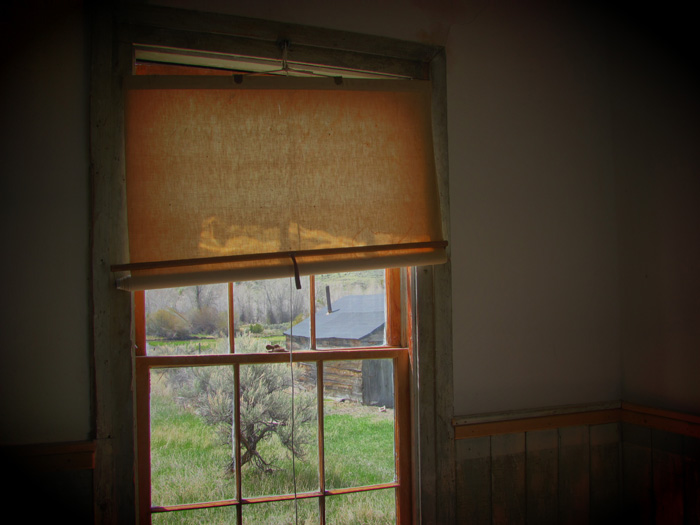
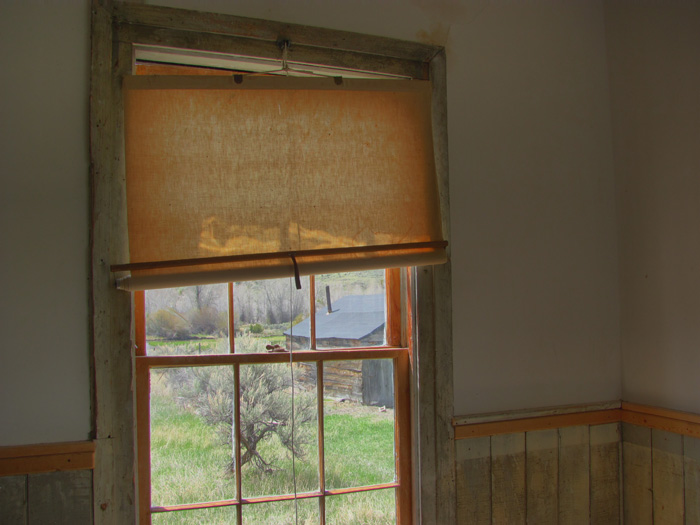
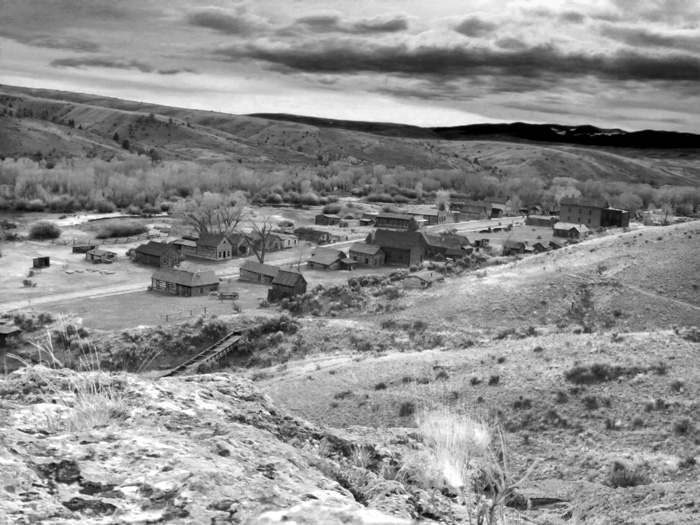
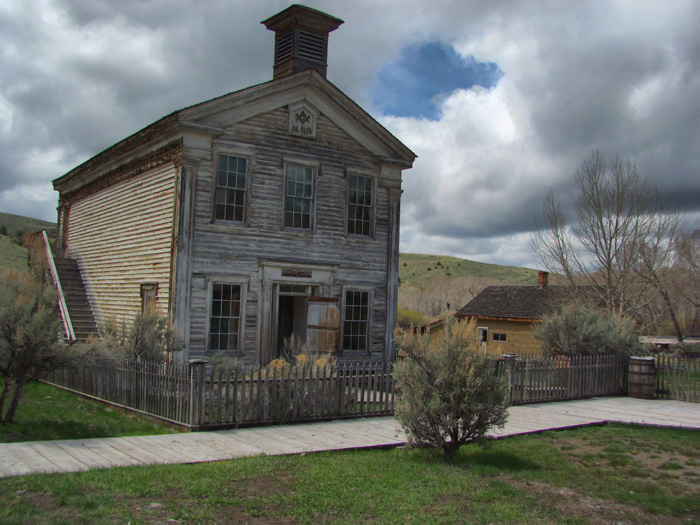
Bannack: Highlights

Click photos for more details.

Bannack: HDR

Click on an image below to see the details.

I used Dynamic Photo for all my HDR enhancements.

Bannack: Macro

What do you get when you blend a desk, broken bottle and mossy stone together? I’ll show you . . .

Original

Texture One: Mossy Stone

Texture Two: Desk Lines

I applied a black and white filter to Desk Lines and the Original. I also used a mask and opacity levels to balance out the textures (especially the moss). The result is a rugged rustic photograph:

Finished Product

Photography Notes:
Original
Bannack, MT; May 25, 2011, 3:40 p.m.
F/3.5 SHUTTER: 1/1250 ISO: 400 Canon Powershot SX120IS

Texture One”: Moss
Bannack, MT; May 25, 2011, 3:43 p.m.
F/4.0 SHUTTER: 1/1600 ISO:100 Canon Powershot SX120IS

Texture Two: Desk Lines
Bannack, MT; May 25, 2011, 12:05 p.m.
F/4.0 SHUTTER: 1/60 EXPOSURE: -1 ISO: 160 PowerShot SX120IS